

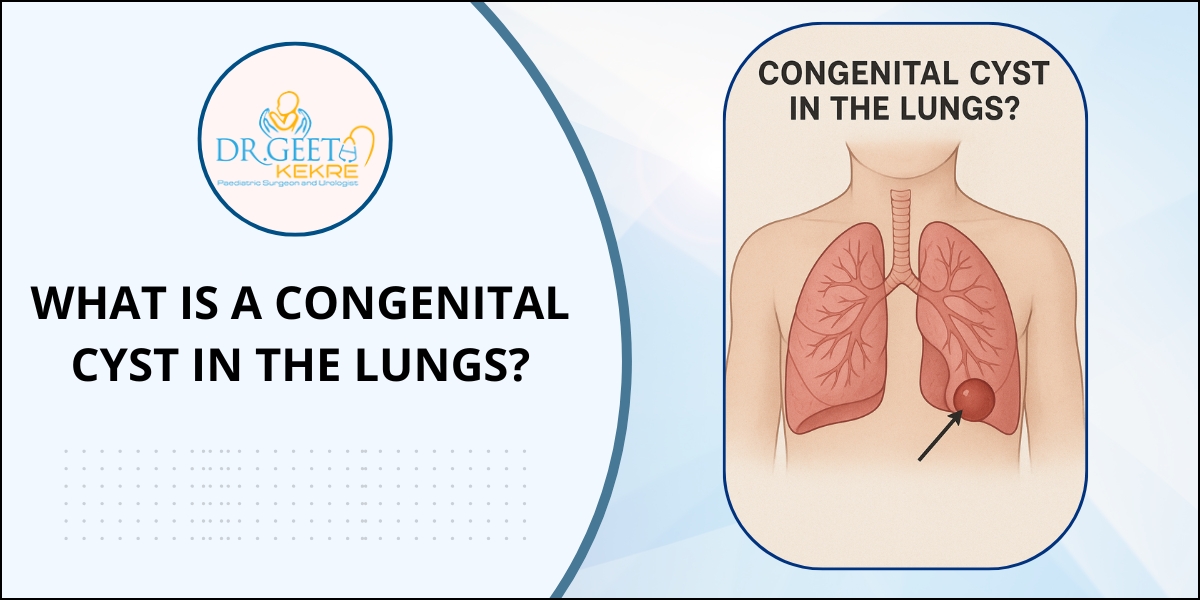
Finding out your unborn or newborn child has a lung condition can be a worrying experience. One of the most common diagnoses is a congenital lung cyst, more accurately known as a Congenital Pulmonary Airway Malformation (CPAM). But what exactly is a CPAM, and what does it mean for your child’s health? This guide breaks down the essentials.
What is a Congenital Cyst in the Lungs?
A congenital cyst in the lungs, or CPAM, is a rare, non-cancerous mass of abnormal lung tissue that develops in a baby before birth. It is not a tumor in the traditional sense, but rather a malformation where the lung tissue doesn’t develop correctly, creating cysts (fluid or air-filled sacs) within a portion of the lung.
These cysts do not function like normal lung tissue and can vary greatly in size and number. Some are small and isolated, while others can be large and affect a significant part of a lung lobe. CPAMs are typically diagnosed during a routine prenatal ultrasound, often around the 20-week mark.
What Causes a CPAM?
The exact cause of CPAM is unknown. It is not linked to anything the mother did or did not do during pregnancy. It occurs sporadically due to an abnormal development in the bronchial tree (the network of airways) early in fetal life. Researchers believe it may be caused by a combination of genetic and environmental factors, but no specific cause has been identified.
Symptoms and Potential Complications
The impact of a CPAM depends heavily on its size and location.
-
Before Birth: Large CPAMs can sometimes push on the baby’s heart and other lung, leading to a buildup of fluid in the chest (hydrops), which is a serious condition.
-
After Birth: Many children with small CPAMs show no symptoms at all. For those who do, symptoms often appear in the first few years of life and can include:
-
Rapid breathing (tachypnea)
-
Respiratory distress
-
Recurrent lung infections, like pneumonia, in the same part of the lung
-
A cough or wheezing that doesn’t resolve
-
How is it Diagnosed and Treated?
Diagnosis: Most CPAMs are identified on a prenatal ultrasound. A fetal MRI may be used to get a more detailed view and confirm the diagnosis. After birth, a chest X-ray or a CT scan can provide clear images of the cysts.
Treatment: The management strategy is highly individualized.
-
Monitoring: Small, asymptomatic CPAMs discovered prenatally are often simply monitored with serial ultrasounds. Many of these will shrink or even disappear before birth.
-
Surgery: For CPAMs that cause significant symptoms (like recurrent infections or breathing difficulties) after birth, the standard treatment is surgical removal. This procedure, called a lobectomy, involves removing the lobe of the lung that contains the malformation. The remaining healthy lung tissue expands over time to fill the space, and most children go on to have excellent lung function and live completely normal, active lives.
A Hopeful Outlook
While the term “congenital lung cyst” sounds alarming, the prognosis for most children with a CPAM is excellent. Advances in prenatal imaging and pediatric surgery have made it a highly manageable condition. With proper diagnosis and a tailored treatment plan from a specialized medical team, the vast majority of children thrive without any long-term health issues.
FAQs About Congenital Lung Cysts
1. What causes a congenital lung cyst?
The exact cause is unknown, but it occurs due to sporadic abnormal development of lung tissue in the womb and is not caused by anything the mother did.
2. Can a congenital lung cyst disappear?
Yes, some small CPAMs can shrink or appear to disappear on their own before birth, a process called involution.
3. Is a congenital lung cyst cancerous?
CPAMs themselves are benign (non-cancerous), but there is a very small, long-term risk of a rare cancer developing within the cyst if left untreated into adulthood, which is why monitoring or surgery is often recommended.
4. How is a congenital lung cyst treated?
Many are simply monitored. For those causing symptoms, the primary treatment is surgical removal of the affected part of the lung (lobectomy).
5. Can a baby live with a lung cyst?
Yes, absolutely. Many babies have no symptoms, and with modern medical care, even those who need surgery typically recover fully and live normal, healthy lives.