

Becoming a new parent is a journey filled with joy, sleepless nights, and lots of doctor visits. Sometimes, those visits bring up words you’ve never heard before, which can be scary. One such word is Biliary Atresia (pronounced BIL-ee-air-ee uh-TREE-zhuh).
If your pediatrician has mentioned this condition, or if you’ve come across it online, you probably have a lot of questions. Let’s break down what it is in the simplest way possible.
The Plumbing System of the Liver
To understand Biliary Atresia, think of your liver as a factory. One of its main jobs is to make a digestive juice called bile. Bile helps break down the fats in the milk your baby drinks.
This factory (the liver) has tiny tubes, or “pipes,” that carry the bile out to the intestines. This network of pipes is called the bile ducts.
So, What Goes Wrong in Biliary Atresia?
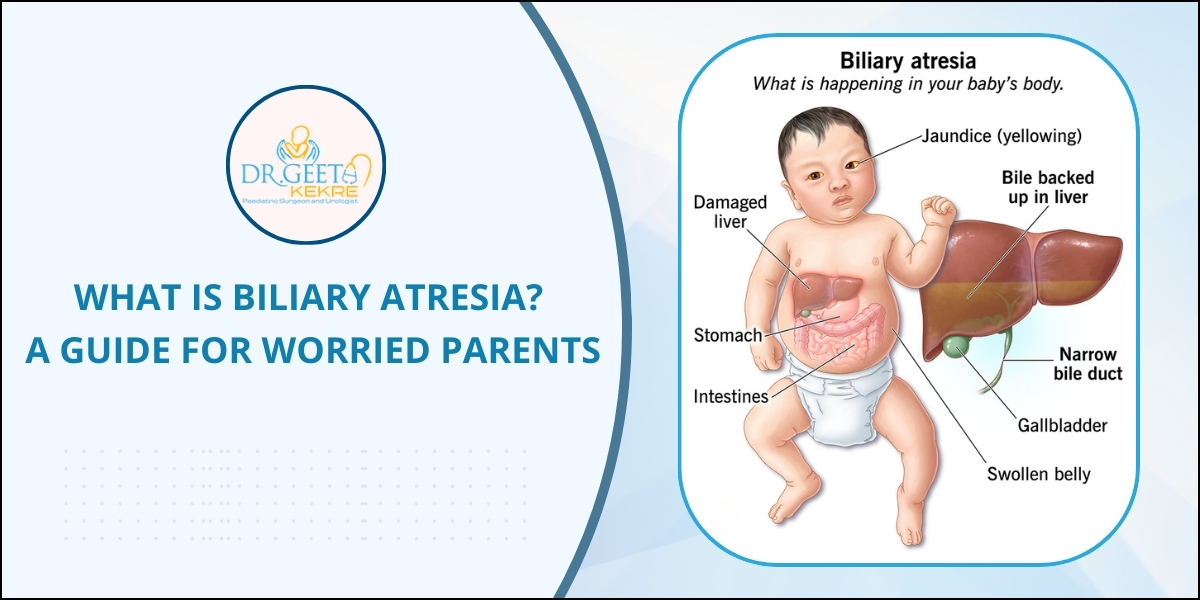
In Biliary Atresia, these important pipes become blocked or damaged. They get inflamed and scarred shut, almost like they are missing or tied off.
Imagine a kitchen sink drain getting clogged. The water (bile) can’t go down the drain, so it backs up into the sink (the liver). Because the bile has nowhere to go, it gets trapped inside the liver, causing damage and scarring. This is called cirrhosis.
Biliary atresia is a rare disease, but it is the most common reason why babies need a liver transplant.
What Are the Warning Signs?
The big problem is that babies with biliary atresia often look healthy at first. The signs usually appear between 2 and 6 weeks after birth. The most important things to watch for are:
-
Jaundice that won’t go away: Many newborns have jaundice (yellowing of the skin and eyes), but it usually clears up in the first two weeks. In biliary atresia, the jaundice gets worse instead of better.
-
Dark Urine: The excess bile in the blood gets filtered by the kidneys and comes out in the urine. A baby’s pee should be almost colorless. If it looks dark yellow or brown, that’s a sign something is wrong.
-
Pale Stools (Poop): This is a huge clue. Bile is what gives poop its normal yellow-brown color. If the bile ducts are blocked, the bile can’t reach the intestines, so the poop will be pale, grey, or chalky white. It might look like clay.
Some babies might also have a swollen belly and gain weight slowly.
How is it Treated?
If a doctor suspects biliary atresia, they will act fast. Time is critical. They will likely send you to a specialist for tests like an ultrasound, blood work, and a special scan to see if the bile is flowing.
The main treatment is a surgery called the Kasai Procedure (named after the Japanese surgeon who invented it).
During this surgery, the surgeon removes the damaged, blocked pipes outside the liver. They then take a piece of the baby’s own intestine and attach it directly to the liver to act as a new drainage pipe. This allows bile to flow from the liver directly into the intestine.
Why is “Early” So Important?
The Kasai procedure works best if it’s done before the baby is 60-70 days old. If it’s done early, it can restore bile flow and let the liver heal, sometimes for many years.
If the surgery doesn’t work, or if the liver gets too scarred over time, the baby will eventually need a liver transplant. Thanks to modern medicine, transplants are very successful, and kids go on to live full, healthy lives.
If you notice your baby has jaundice after two weeks or see pale, chalky stools, please contact your doctor immediately. Trust your gut—you know your baby best.