

When a baby boy is born, parents naturally pay attention to every little detail of their child’s health. One condition that sometimes worries parents is an undescended testis (also called undescended testicle). While the name may sound complicated, the condition is quite common in baby boys and can usually be treated successfully when identified early.
This blog explains everything parents need to know in simple language — including causes, symptoms, risks, and treatment options for undescended testis in children.
What is an Undescended Testis?
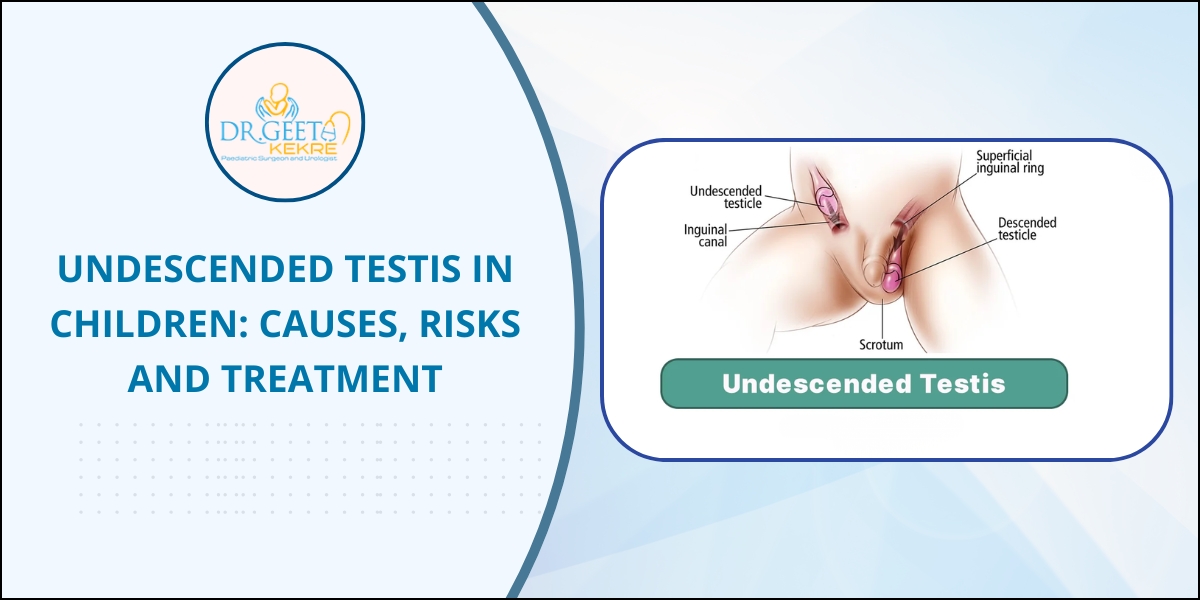
Before birth, a baby boy’s testicles develop inside the abdomen. Normally, they move down into the scrotum (the skin pouch below the penis) before or shortly after birth.
An undescended testis happens when one or both testicles fail to move into the scrotum properly.
In medical terms, this condition is called Cryptorchidism.
How Common is It?
Undescended testis is one of the most common conditions seen in newborn boys.
- It affects about 3–5% of full-term baby boys
- It is more common in premature babies
- In many babies, the testicle comes down naturally within the first few months
However, if it does not descend by 6 months of age, medical treatment may be needed.
Signs and Symptoms of Undescended Testis
Parents may notice:
- One side of the scrotum appears empty
- Both sides of the scrotum may look underdeveloped
- The testicle cannot be felt in the scrotum during bathing or diaper change
Usually, the child does not experience pain.
Sometimes the condition is detected during a routine pediatric check-up.
Types of Undescended Testis
1. Unilateral Undescended Testis
Only one testicle is undescended.
2. Bilateral Undescended Testis
Both testicles are not present in the scrotum.
3. Retractile Testis
The testicle moves back and forth between the groin and scrotum. This may not require surgery but should be monitored by a doctor.
Causes of Undescended Testis
The exact cause is not always known, but several factors may increase the risk:
- Premature birth
- Low birth weight
- Family history of the condition
- Hormonal problems during pregnancy
- Genetic conditions
- Maternal smoking or alcohol use during pregnancy
In many cases, there is no specific reason.
Why Early Treatment is Important
Ignoring an undescended testis can lead to complications later in life.
1. Fertility Problems
The testicles need a cooler temperature inside the scrotum for healthy sperm production. If they remain inside the abdomen, fertility may be affected.
2. Increased Risk of Testicular Cancer
Boys with untreated undescended testis have a slightly higher risk of developing testicular cancer later in life.
3. Hernia
Some children may also develop an inguinal hernia.
4. Twisting of the Testicle (Testicular Torsion)
This painful condition may affect blood supply to the testicle.
5. Emotional or Cosmetic Concerns
As children grow older, the appearance of the scrotum may affect confidence or emotional well-being.
When Should Parents See a Doctor?
Parents should consult a pediatric surgeon or pediatric urologist if:
- One or both testicles are missing from the scrotum
- The condition continues after 6 months of age
- There is swelling or pain in the groin
- The child has associated genital abnormalities
Early diagnosis helps prevent future complications.
How is Undescended Testis Diagnosed?
Doctors usually diagnose the condition through a physical examination.
In some cases, additional tests may be recommended:
- Ultrasound scan
- MRI scan
- Hormonal blood tests
- Laparoscopy (for locating hidden testicles)
Treatment for Undescended Testis
Observation in Infants
In babies younger than 6 months, doctors may wait because the testicle may descend naturally.
Surgery (Orchiopexy)
If the testicle does not descend on its own, surgery is usually recommended between 6 months and 1 year of age.
During the procedure:
- The surgeon moves the testicle into the scrotum
- It is fixed in the correct position
- The surgery is generally safe and successful
Most children recover quickly and can go home the same day.
What Happens After Surgery?
After treatment:
- The child usually recovers within a few days
- Regular follow-ups may be advised
- Most boys grow up normally with good reproductive health
Early surgery improves fertility outcomes and reduces future health risks.
Can Undescended Testis Be Prevented?
There is no guaranteed way to prevent the condition, but healthy pregnancy habits may help reduce risk:
- Avoid smoking and alcohol during pregnancy
- Attend regular prenatal check-ups
- Maintain proper nutrition during pregnancy
Undescended testis is a common and treatable condition in children. The key is early diagnosis and timely treatment. Parents should not panic, but they should not ignore the issue either.
If you notice that your child’s testicle is missing from the scrotum, consult a pediatric specialist for proper evaluation. Early care can protect your child’s future health and fertility.
Consult a Pediatric Specialist
If your child shows signs of an undescended testis, seek expert medical advice for accurate diagnosis and timely treatment. Early intervention can make a significant difference in your child’s long-term health and development.
Frequently Asked Questions (FAQs)
Is undescended testis painful?
Usually, no. Most children do not feel pain.
Can the condition correct itself?
Yes, in some babies the testicle descends naturally within the first few months.
Is surgery necessary?
If the testicle does not descend by 6 months, surgery is often recommended.
Is undescended testis dangerous?
If untreated, it may increase the risk of fertility problems and testicular cancer later in life.
Can a child live normally after treatment?
Yes. With timely treatment, most children lead completely healthy lives.