

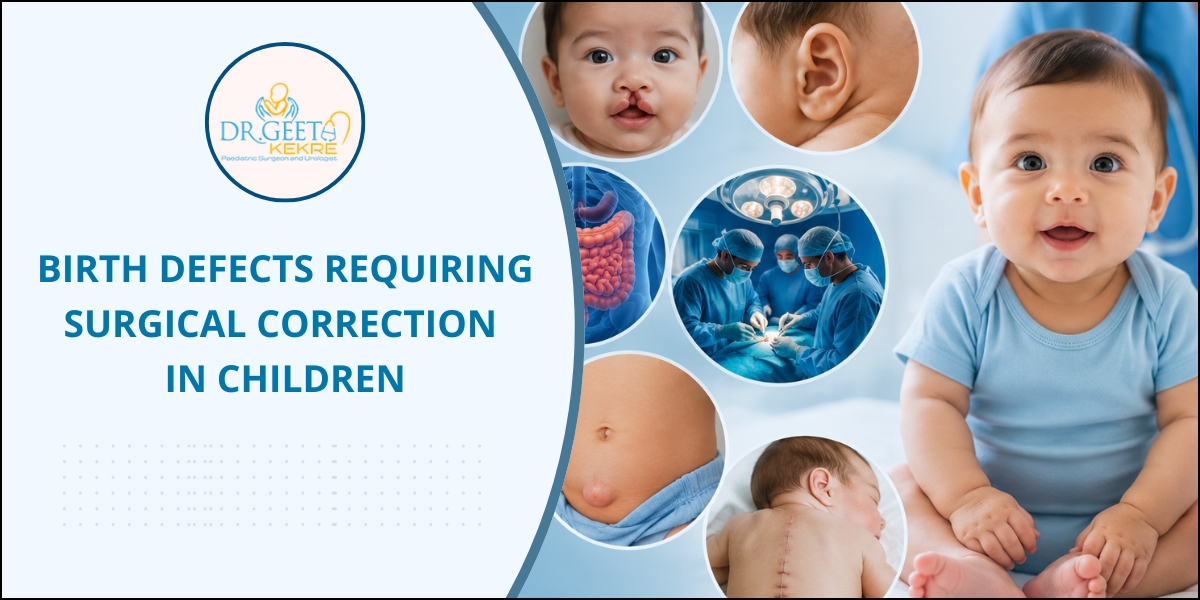
The birth of a child is one of life’s most joyful moments. However, some babies are born with congenital anomalies (birth defects) that may require surgical correction to ensure proper growth, development, and quality of life. While hearing that your child needs surgery can be overwhelming, advances in pediatric surgery have made the treatment of many congenital conditions highly successful.
What Are Birth Defects?
Birth defects are structural or functional abnormalities that develop while the baby is growing in the womb. They may affect different organs such as the digestive system, urinary tract, heart, lungs, bones, or reproductive organs.
Some birth defects are minor and require no treatment, while others need surgical correction shortly after birth or during early childhood.
Common Birth Defects That Require Surgical Correction
1. Cleft Lip and Cleft Palate
A cleft lip or cleft palate occurs when the tissues of the upper lip or roof of the mouth do not fuse properly during pregnancy.
Symptoms
- Visible opening in the upper lip
- Gap in the roof of the mouth
- Difficulty breastfeeding
- Feeding problems
- Speech difficulties later in life
- Frequent ear infections
Treatment
Surgery is usually performed within the first year of life to repair the lip and palate. Additional procedures, speech therapy, and dental care may also be required as the child grows.
2. Hernias in Children
Inguinal Hernia
An inguinal hernia occurs when part of the intestine protrudes through a weak area in the abdominal wall.
Symptoms
- Swelling in the groin
- Bulge that becomes more noticeable while crying
- Pain or discomfort
Umbilical Hernia
This appears as a bulge near the belly button.
While many umbilical hernias close naturally by age 4–5 years, larger or persistent hernias may require surgery.
3. Undescended Testes (Cryptorchidism)
Normally, a baby boy’s testicles descend into the scrotum before birth. If one or both remain in the abdomen or groin, surgery may be necessary.
Risks of Delayed Treatment
- Reduced fertility
- Higher risk of testicular cancer
- Increased risk of injury
- Hernia formation
Treatment
A procedure called orchiopexy is typically recommended between 6 and 18 months of age.
4. Hypospadias
Hypospadias is a condition where the urinary opening is located on the underside of the penis instead of at the tip.
Symptoms
- Abnormal urinary stream
- Curved penis
- Difficulty urinating while standing
Treatment
Pediatric urologists usually perform corrective surgery between 6 and 18 months of age.
5. Pyloric Stenosis
This condition occurs when the muscle between the stomach and small intestine becomes abnormally thick, preventing food from passing into the intestine.
Symptoms
- Forceful vomiting after feeding
- Persistent hunger
- Weight loss
- Dehydration
Treatment
A minimally invasive procedure called pyloromyotomy effectively corrects the obstruction.
6. Intestinal Atresia
In intestinal atresia, part of the intestine is absent or blocked.
Symptoms
- Vomiting soon after birth
- Swollen abdomen
- Failure to pass stool
- Feeding intolerance
Treatment
Emergency surgery is often required to reconnect healthy portions of the intestine.
7. Hirschsprung Disease
This condition occurs when nerve cells are absent in a section of the large intestine, preventing normal bowel movements.
Symptoms
- Delayed passage of meconium
- Chronic constipation
- Abdominal swelling
- Vomiting
- Poor growth
Treatment
Surgery removes the affected segment of the intestine and reconnects the healthy bowel.
8. Congenital Diaphragmatic Hernia (CDH)
In this condition, a hole in the diaphragm allows abdominal organs to move into the chest cavity, affecting lung development.
Symptoms
- Severe breathing difficulty after birth
- Rapid breathing
- Bluish skin
- Poor oxygen levels
Treatment
After stabilizing the baby, surgeons repair the diaphragm to restore normal anatomy.
9. Anorectal Malformations (Imperforate Anus)
Some babies are born without a normal anal opening or with abnormal connections between the rectum and nearby organs.
Symptoms
- No anal opening
- Difficulty passing stool
- Abdominal swelling
Treatment
Corrective surgery restores normal bowel function. Some children may require staged procedures.
10. Congenital Lung Malformations
These include abnormal lung tissue or cysts present at birth.
Symptoms
- Recurrent chest infections
- Difficulty breathing
- Persistent cough
Treatment
Surgical removal of the abnormal lung tissue prevents future complications.
11. Congenital Urinary Tract Obstruction
Some babies are born with blockages affecting urine flow from the kidneys or bladder.
Symptoms
- Swollen kidneys detected during pregnancy
- Urinary infections
- Poor urine flow
- Kidney damage if untreated
Treatment
Depending on the severity, minimally invasive or open surgery may be recommended.
12. Spina Bifida (Selected Cases)
Spina bifida occurs when the spinal cord does not develop properly.
Symptoms
- Visible swelling on the back
- Weakness in the legs
- Bladder and bowel problems
Treatment
Many infants undergo surgery soon after birth to protect the spinal cord and reduce complications.
How Are Birth Defects Diagnosed?
Many congenital conditions can be detected before birth through prenatal screening.
Diagnostic methods include:
- Routine pregnancy ultrasound
- Fetal anomaly scan
- Fetal MRI (when required)
- Genetic testing in selected cases
- Physical examination after birth
- X-rays
- Ultrasound
- CT scan or MRI
- Blood investigations
- Endoscopy (in specific conditions)
Is Pediatric Surgery Safe?
Modern pediatric surgery is highly specialized. Pediatric surgeons work alongside pediatric anesthesiasts, neonatologists, and intensive care teams to provide safe treatment tailored to infants and children.
Many procedures are now performed using minimally invasive (laparoscopic or thoracoscopic) techniques, resulting in:
- Smaller incisions
- Less pain
- Faster recovery
- Shorter hospital stays
- Better cosmetic results
Caring for Your Child After Surgery
Recovery depends on the type of surgery performed. Parents should:
- Follow medication instructions carefully.
- Keep the surgical wound clean and dry.
- Attend all follow-up appointments.
- Monitor for fever, swelling, redness, or unusual discharge.
- Encourage proper nutrition for healing.
- Follow activity restrictions recommended by the surgeon.
Most children recover remarkably well and return to normal activities within weeks.
If your child has been diagnosed with a congenital condition, consult an experienced pediatric surgeon to discuss the most appropriate treatment plan. With timely intervention and compassionate care, many children recover well and enjoy a healthy, fulfilling future.
Frequently Asked Questions (FAQs)
Can all birth defects be treated with surgery?
No. Some birth defects require only observation or medical management, while others benefit from surgical correction. Treatment depends on the specific condition and its severity.
When should surgery be performed?
Some conditions require emergency surgery immediately after birth, while others are corrected during infancy or early childhood for the best outcomes.
Will my child lead a normal life after surgery?
In many cases, yes. With timely diagnosis, expert surgical care, and regular follow-up, most children go on to live healthy, active lives.
Are minimally invasive surgeries available for children?
Yes. Many congenital conditions can be treated using laparoscopic or thoracoscopic techniques, depending on the child’s age and the nature of the condition.