

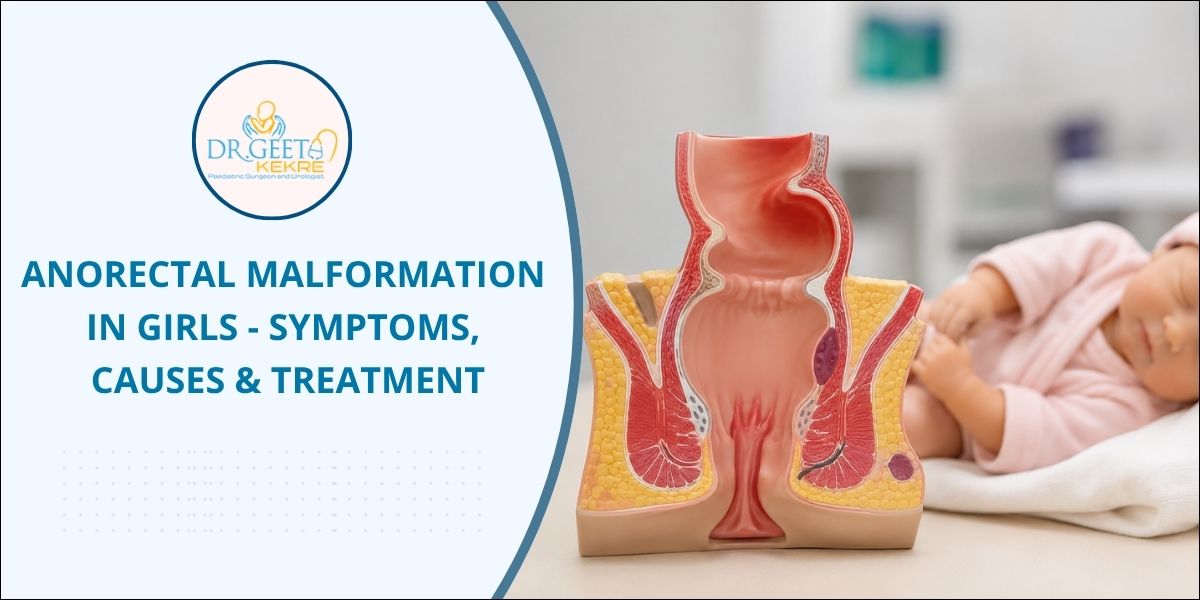
Anorectal malformation (ARM) is a birth condition in which the anus and rectum do not develop normally. In girls, the condition can sometimes be noticed immediately after birth, while milder forms may not become obvious until later. It can affect bowel movements and, in some cases, the urinary or reproductive system as well.
For parents, hearing that their baby has an anorectal malformation can be worrying. However, several types of ARM can be treated successfully with the right evaluation and surgery. Early diagnosis and regular follow-up can help children achieve better bowel function and overall health.
What Is Anorectal Malformation in Girls?
Normally, the rectum ends at the anus, allowing stool to leave the body. In anorectal malformation, the anus may be absent, too narrow, located in an unusual position, or connected abnormally to another organ.
In some girls, the rectum may open into the vagina or urinary tract through an abnormal passage called a fistula. A more complex condition called a cloaca may occur when the rectum, vagina and urinary tract join into a common channel.
The exact type and severity of ARM vary from child to child, so treatment is planned according to the individual anatomy.
Symptoms of Anorectal Malformation in Girls
Some signs are visible soon after birth, while others may appear later. Common symptoms include:
- No visible anal opening
- An unusually small or misplaced anal opening
- Difficulty passing stool
- Abdominal swelling or bloating
- Constipation
- Recurrent urinary tract infections
- Stool passing through the vagina or urinary opening
- Foul-smelling vaginal discharge
- Poor bowel control in some children
If a newborn does not pass stool normally or has an unusual opening where the anus should be, medical evaluation is important.
What Causes Anorectal Malformation?
The exact cause of anorectal malformation is not fully understood. It develops while the baby is growing in the womb, when the lower digestive and pelvic structures are forming.
ARM is generally considered a developmental condition rather than something caused by a parent’s actions during pregnancy. In some children, it may occur along with other birth conditions involving the spine, kidneys, heart or genital organs.
Doctors may therefore recommend additional tests to check whether other organs are affected.
How Is Anorectal Malformation Diagnosed?
A physical examination after birth is often the first step. Depending on the suspected type of ARM, doctors may recommend imaging and other tests to understand the anatomy clearly.
These may include ultrasound, X-rays, MRI or other investigations. In girls, doctors may also examine the urinary and reproductive systems, particularly when a fistula or cloaca is suspected.
Accurate diagnosis helps the pediatric surgical team decide the safest and most appropriate treatment approach.
Treatment for Anorectal Malformation in Girls
Treatment depends on the type of malformation, the location of the rectum and whether other organs are involved.
Surgery
Surgery is the main treatment for most anorectal malformations. The goal is to create or reposition an anal opening and place the rectum in the correct position so that stool can pass normally.
Some children with less complex forms may require a single corrective procedure. Children with more complex ARM may need staged treatment.
Colostomy
In certain cases, especially with complex malformations, a temporary colostomy may be performed first. This creates an opening in the abdomen through which stool can pass into a bag, allowing the lower bowel and tissues to be managed safely before definitive repair.
A later surgery can restore the normal passage of stool.
Post-Surgery Care
Treatment does not always end after surgery. Children may need follow-up appointments to monitor bowel movements, healing and bowel control.
Parents may be advised about stool-softening medicines, diet, bowel management and anal dilatation when required. Regular follow-up is particularly important because constipation and bowel-control difficulties can occur in some children.
Can Girls With ARM Live a Normal Life?
Many girls with anorectal malformation can grow, attend school, participate in daily activities and enjoy a good quality of life after appropriate treatment. The outcome depends on the type of ARM, associated conditions, nerve and muscle development, and bowel function.
Some children may continue to experience constipation or difficulty controlling stools and may need a structured bowel-management program. Children with complex conditions may also require long-term care involving pediatric surgeons, gastroenterologists, urologists or other specialists.
When Should Parents Consult a Doctor?
Parents should seek medical attention if a newborn has no normal anal opening, does not pass stool, develops significant abdominal swelling, or passes stool through an unusual opening.
For older children, persistent constipation, recurrent urinary infections, stool leakage or stool passing through the vagina should also be evaluated. Early assessment by a pediatric surgeon can help identify the problem and determine the appropriate treatment.
FAQs
1. Is anorectal malformation present from birth?
Yes. Anorectal malformation is a congenital condition that develops before birth.
2. Can anorectal malformation be treated?
Yes. Most cases require surgical treatment, although the exact procedure depends on the type of malformation.
3. What is a fistula in anorectal malformation?
A fistula is an abnormal connection between the rectum and another organ, such as the vagina or urinary tract.
4. Can ARM cause constipation later in life?
Yes. Some children may develop constipation or bowel-control problems after treatment and may need ongoing bowel management.
5. Is colostomy required for every girl with ARM?
No. A colostomy is usually considered for selected complex cases and is not necessary for every child.