

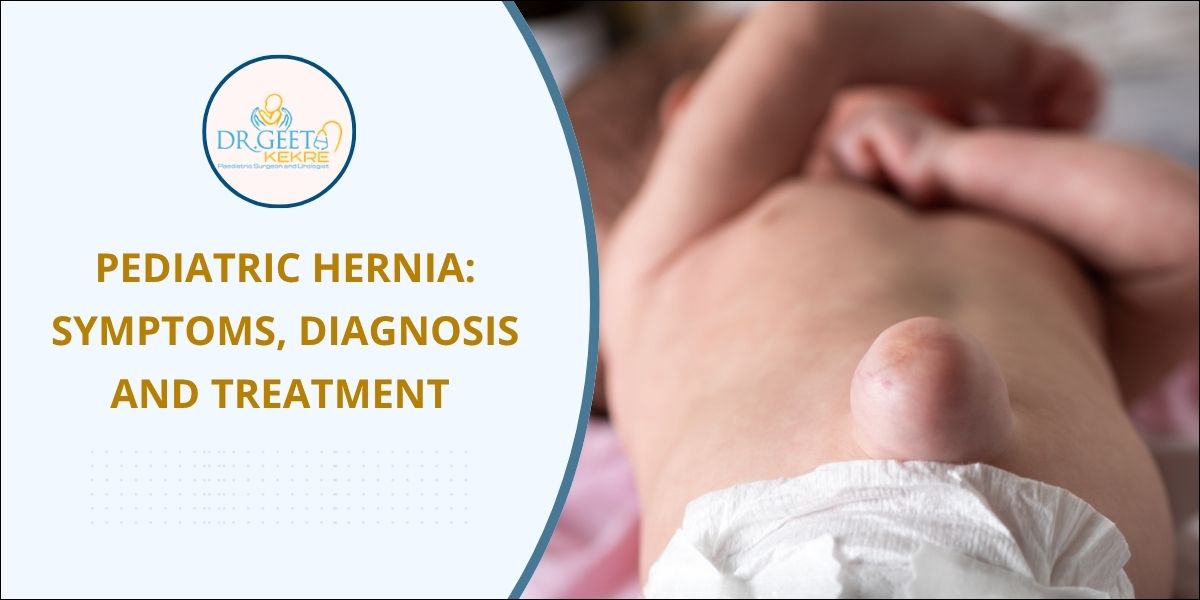
Pediatric hernia is a bulge that appears when part of the intestine, fat or fluid pushes through a weak spot in a child’s abdominal wall, most often in the groin (inguinal hernia) or at the belly button (umbilical hernia). It often shows up as a soft swelling that becomes bigger when the child cries or strains and smaller when they relax. Groin hernias in children usually need surgical repair, while many belly button hernias in babies close on their own. A paediatric surgeon can confirm the type and advise on the right timing.
This guide explains the types of hernia in children, the symptoms to watch for, how the diagnosis is made, the treatment options and what recovery usually looks like.
What Is a Hernia in Children?
A hernia forms when there is an opening or weak area in the muscle wall of the abdomen. Tissue from inside the abdomen moves through that gap and creates a visible or palpable bulge. In children, most hernias are linked to how the body develops before birth, rather than to heavy lifting or strain as seen in adults.
Hernia surgery is one of the most common operations performed by paediatric surgeons. You can read more about how children’s hernias differ in our article on hernia in children versus adults.
Types of Pediatric Hernia
Inguinal hernia
This is the most common type seen in children. Before birth, a small channel forms from the abdomen down into the groin. It normally closes before or soon after birth. If it stays open, intestine or fluid can move into it. Inguinal hernias are more common in boys and in babies born prematurely, but girls can have them too.
Umbilical hernia
This appears as a soft bulge at the belly button. It happens when the muscle ring around the umbilical cord does not close fully. Umbilical hernias are common in infants and many close naturally in the first few years of life.
Other types
Less common types include epigastric hernia (in the upper abdomen, between the belly button and the ribs) and congenital diaphragmatic hernia, a rare condition present at birth that affects breathing. A related condition, hydrocele, is a collection of fluid around the testicle and is often assessed along with hernias.
What Are the Symptoms of Hernia in a Child?
Parents usually notice the hernia first, often during a bath or nappy change. Common signs include:
- A soft swelling in the groin, scrotum, labia or at the belly button
- A bulge that grows when the child cries, coughs or strains and shrinks when they are calm or asleep
- Mild discomfort or fussiness in some children, although many hernias cause no pain at all
- In older children, a dragging feeling or ache in the groin after activity
When is a hernia an emergency?
Sometimes the intestine gets trapped in the hernia and cannot slip back. This is called an incarcerated hernia and needs urgent care. Seek emergency help if you notice:
- A bulge that becomes hard, tender or does not go back in
- Redness or bluish colour over the swelling
- Persistent crying that cannot be settled
- Vomiting, a swollen tummy or not passing stool
- Fever along with a painful bulge
How Is a Pediatric Hernia Diagnosed?
In most cases the diagnosis is made through a physical examination. The surgeon looks at and gently feels the area, sometimes while the child is standing, coughing or crying, because this makes the bulge easier to see. Photographs taken by parents when the swelling is visible can also help, since some hernias come and go.
An ultrasound may be advised if the findings are unclear, if a hydrocele needs to be told apart from a hernia, or if another condition is suspected. Blood tests are usually only needed before surgery or when the child is unwell.
Treatment Options for Hernia in Children
Watchful waiting for umbilical hernia
Small umbilical hernias in babies are often observed over time. Taping coins or binders over the belly button is not advised. Surgery may be considered if the hernia is large, persists beyond early childhood or causes symptoms.
Surgery for inguinal hernia
Inguinal hernias do not close on their own, so surgical repair is generally recommended after diagnosis. The surgeon closes the open channel so the intestine can no longer slip through. The procedure is done under general anaesthesia given by a paediatric anaesthetist.
Open versus laparoscopic repair
Hernia repair can be done through a small cut in the groin (open repair) or using keyhole (laparoscopic) surgery with a camera and small instruments. Laparoscopic repair also allows the surgeon to check the other side for an open channel. Dr. Geeta Kekre performs minimal access surgery for children, and the choice of approach depends on the child’s age, health and type of hernia. Your surgeon will explain the options and risks for your child.
What Is Recovery Like After Hernia Surgery?
Many children have hernia repair as a day care surgery and go home the same day. Recovery is usually smooth, but every child heals at their own pace. General points include:
- Mild soreness for a few days, managed with medicines prescribed by the doctor
- Returning to normal feeding and diet as advised
- Keeping the wound clean and dry as instructed
- Avoiding rough play and cycling for the period your surgeon recommends
- Attending the follow-up visit
Contact the surgical team if you notice fever, increasing redness, discharge from the wound or swelling that returns. Our guide on how to prepare your child for surgery has practical tips for the day of the operation.
Frequently Asked Questions
Can a hernia in a child go away on its own?
An umbilical hernia in a baby often closes by itself in the first few years of life. An inguinal (groin) hernia does not close by itself and is usually repaired with surgery, because of the risk that intestine can get trapped.
At what age is hernia surgery done in children?
There is no single age. Inguinal hernias are usually repaired soon after diagnosis, including in infants, after the surgeon checks the child’s overall health. Umbilical hernias are often watched for some years unless they are large or cause problems. Your paediatric surgeon will advise on timing.
Is hernia surgery in children a major operation?
Hernia repair in children is a common procedure and is often done as day care surgery under general anaesthesia, so many children go home the same day. Like any surgery, it carries some risks, which your surgeon will explain.
What are the warning signs of a trapped hernia?
A bulge that becomes hard, tender, red or blue and does not go back in, along with crying, vomiting, a swollen belly or fever, needs emergency care. Do not try to push it back forcefully. Go to the nearest emergency department.
Is a hernia in a baby caused by crying?
No. Crying or straining can make an existing hernia more visible, but it does not cause it. Most childhood hernias are related to how the abdominal wall and groin develop before birth.
Can girls get inguinal hernias?
Yes. Inguinal hernias are more common in boys, but girls can also have them. In girls, an ovary can sometimes be felt in the hernia sac, so prompt surgical review is advised.